During my recent talk at Crash Monday in Wrocław, I shared something that every marketer eventually faces, no matter how experienced they are. At some point, your brand needs a visual identity, a new website, or simply a refreshed look. And suddenly you must decide who will help you create it. As a designer who has spent years on the other side of the brief, I wanted to lift the curtain a little and show what that process looks like from my perspective.
My path has taken me through three different worlds. I started as a junior in a large agency, moved into freelance when I wanted more creative autonomy, and now I am beginning a new chapter with my own studio. Each environment taught me something different about how clients choose their creative partners and, more importantly, how those choices shape the final outcome.

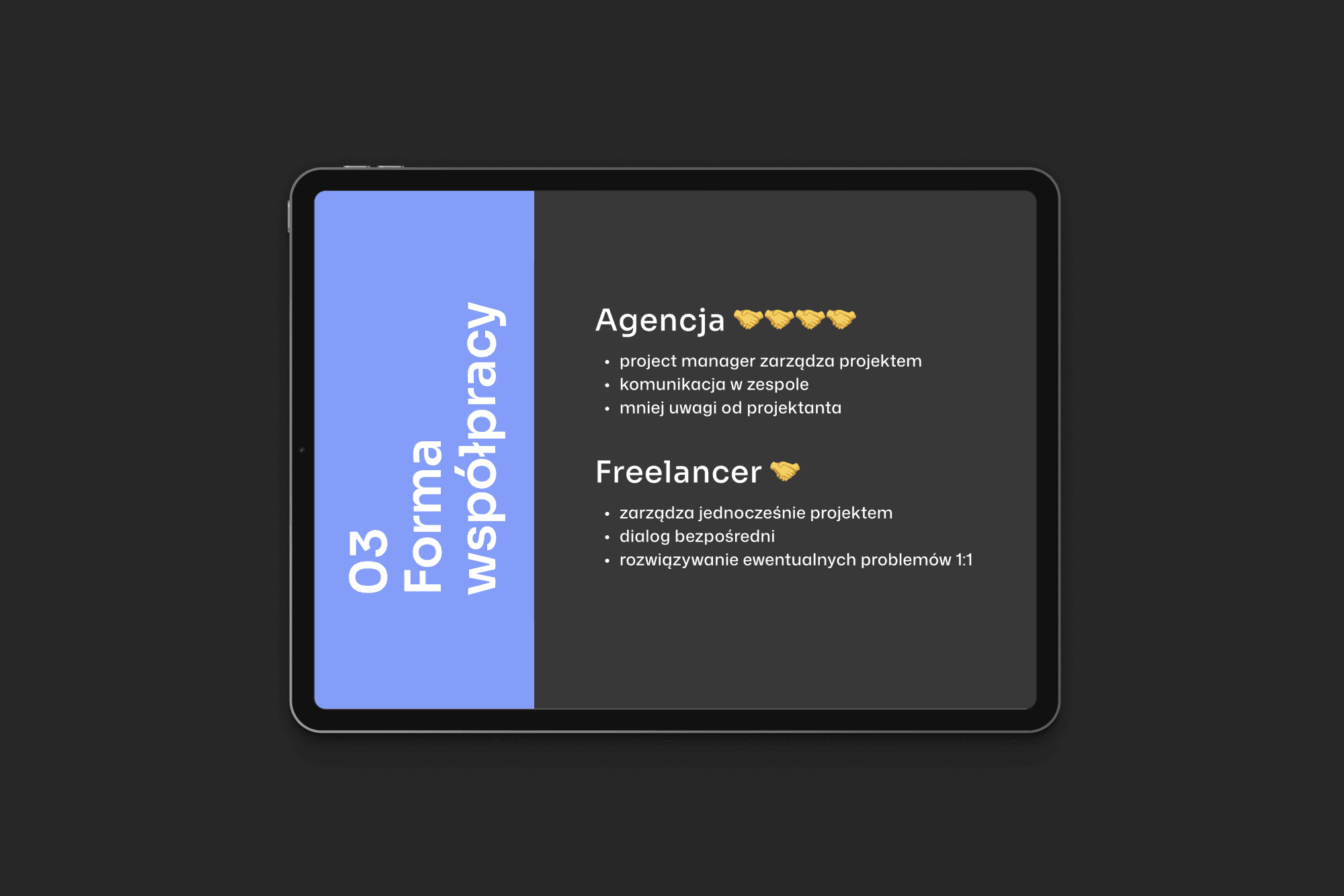
One of the first decisions people make is whether they want to work with an agency or a freelancer. Marketers know the theory, but the practice looks different from the designer’s seat. In an agency, the structure, the team, and the processes create predictability and continuity, which is reassuring for large or long-term projects. But that comes with a cost. Communication is organised and the workflow continues even if someone leaves the team, yet there is often greater distance between the client and the designer. The person who meets with the client is not always the person who creates the final work.
Freelancers offer a more flexible, personal approach. They can move faster, adapt to your needs, and collaborate with you directly, but this also requires trust and clear communication. Everything depends on one individual, and the relationship needs to work on a personal and professional level. You also need to be prepared to give sometimes uncomfortable feedback directly, which some people find challenging. When marketers choose a freelancer, they are choosing not just a skillset, but a partnership.
Neither option is better or worse. It is simply about the right fit.
From the designer’s perspective, what matters most is not the label on the door but the fit between the designer’s style and the brand’s vision. Portfolios tell a story, not only about past clients, but about the creative instincts behind the work. It is tempting to choose someone who has done twenty projects in your industry. But sometimes the better match is the person whose style reflects the tone and personality you want, even if they have never touched your category. That match of aesthetics and intuition matters far more than the number of similar logos in someone’s past projects.
During the talk, I also encouraged marketers to pay closer attention to who exactly will be creating their project when they choose an agency. Agency portfolios are often collective. Designers rotate, teams shift, and the person you imagined working with may not be the one who actually designs your website or your brand. It is completely reasonable to ask who will be responsible and to see their individual work. From the designer’s perspective, this transparency helps both sides align early and avoid disappointment later.
Then comes the brief, that often underestimated tool that can make or break a project. A thoughtful brief, paired with a brand book if you have one, is like a GPS for the designer. It keeps everyone moving in the right direction and ensures that your brand’s identity remains consistent across every touchpoint. Without it, even the most talented designers can misinterpret your vision.
And yes, there are red flags to watch for. If a designer or agency doesn’t ask about your brand guidelines, or can’t show the actual work of the person assigned to your project, pause and ask questions. The right team will understand your brand deeply, communicate clearly, and take ownership of the project from start to finish.

At the end of the day, choosing who will assist you with your branding journey is about more than skills or experience. It’s about alignment, communication, and trust. It’s about finding the people who will not just execute your vision, but help shape it with insight, creativity, and care. And if you’re still unsure, that’s okay. Every project is unique, and the right answer depends on your goals, your budget, and the way you want to work.
Branding is a long-term journey, not a transaction. And the right people make all the difference.